How Podcasting Can Achieve Your Science Communication Goals




When science communication is done well, its benefits are far-reaching. From engaging the public, to furthering research in particular fields, good comms can make science more impactful.
This article drills into how podcasts can be used to achieve the goals of science communications. Referencing successful science podcasts from organisations and individuals, it highlights the best podcasting practices for anyone looking to share science.
Why Science Communicators Are Choosing Podcasts
Given its boom in listenership over the past decade, many are using podcasts as the choice format for their science communication. Podcasting is often perceived as low-cost and easy to do. Now consider this combined with podcasts' wide listenership. It’s easy to see podcasting offers promise for science communicators to reach their target audience. Be them their peers, researchers in a different field or the general public. Another plus is the ability to engage groups beyond scientists, giving podcasting a broad efficacy other mediums lack.
What Are the Two General Goals of Science Communication?
Science communication is a broad discipline made up of a myriad of goals. But these can be loosely divided into two interconnected and overlapping categories:
- Engaging the general public.
- Furthering scientific fields.
We’ll look at how podcasting can achieve both of these, but let’s first specify what each entails.
Science Communication's Goal 1: Engaging The General Public
In regards to engaging with the public, the American Association for the Advancement of Science (AAAS)’s model maps out what successful science communications achieves. This is broken down into 8 key areas:
- Sound, evidence-informed public decision making on science-related issues.
- Dialogue on critical science-society issues embedded in public discourse.
- Influence individual and collective action and behaviour.
- Influence policy.
- Influence research agendas.
- Research that is responsive to societal needs and interests.
- Resilient STEM workforce.
- Science embedded in daily life.
Science Communication's Goal 2: Furthering Scientific Fields
The other broad side of science communication is furthering scientific fields. This can take many shapes, such as:
- Disseminating the latest research and developments in any scientific field.
- Supporting researchers in their careers, leading to greater contributions.
- Nurturing the pipeline of future scientists and researchers.
- Securing funding: public, political and private.
It’s clear these goals are well-connected, and can happen either consequently or concurrently in relation to each other.
Given this, successful science communication podcasts often achieve several of these goals in one. Let’s look at Professor David Nutt’s show, The Drug Science Podcast, as an example of different goals feeding into each other.
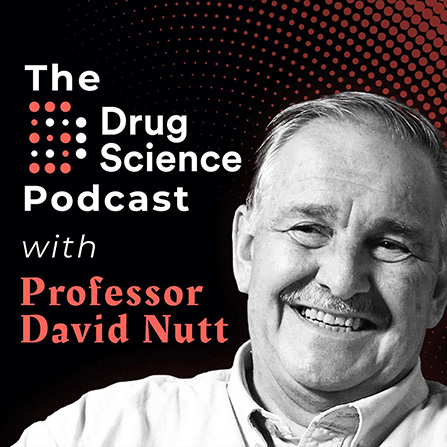
The Drug Science Podcast’s broad aim is to disseminate science-based drug policies. Through interviews with experts and activists in drug-related fields, the show highlights how existing drug-based policies are often in contradiction to the science around their benefits, capabilities and harms.
By presenting the science around different drugs and analyzing drug policies, the show presents listeners with the evidence around drug-related issues. As the show acknowledges, this can be seen as contentious. But this independent standpoint - free from moral or political bias - is necessary for the dialogue around drugs. By sharing the science, the show equips listeners to make meaningful contributions to the public discussion around drugs. This in turn, helps promote better public decision making on drug-related laws.
How Podcasting Can Help Further Scientific Fields
Podcasts Drive Funding For New Research
The Drug Science Podcast is part of a digital ecosystem of the charity, Drug Science. Here it is summarised in its own words
“Drug Science works to provide an evidence base free from political or commercial influence, creating the foundation for sensible and effective drug laws, and equipping the public, media and policy makers with the knowledge and resources to enact positive change.”
Alongside sharing the science around drugs, The Drug Science Podcast encourages listeners to donate to the Drug Science charity. The charity has no commercial funding, instead relying on donations from the public. From a marketing perspective, the podcast can be seen as a top-of-the-funnel driver for the charity’s supporters. It helps acquire new users, shares the Drug Science cause, and encourages them to convert into donors.
While some donor contributions are reinvested in the podcast itself, a large part goes towards paying for new research.
This shows how podcasting can help foster further research in a scientific field. On one hand, there is a casual link between increasing public engagement and influencing research agendas. Especially as the public become more scientifically literate and curious about a particular field. But more directly, as is the case with The Drug Science Podcast, podcasts can be used to help drive public funding to pay for studies. Especially in areas that don’t receive much government or commercial funding.
Considering the untapped health benefits of illicit drugs, The Drug Science Podcast supports direct funding research that is responsive to societal needs and interests.
How Podcasts Disseminate The Latest Research & Developments For Those STEM Jobs
Science communications hold similar importance for the science communities themselves too. This has increased with the growth of global research output. Researchers could once keep updated by reading relevant papers to their field. But the increase in research output and digital papers has made it more challenging to stay up to date by reading alone. Beyond searching Google Scholar, researchers need novel ways to stay up to date with their field.
Podcasts are one way they can do so. Dedicated shows can act like a modern RSS feed in themselves or highly-curated audio newsletters. Listeners are signposted to interesting developments, updating them when they’re on the move and less able to sit down and read.
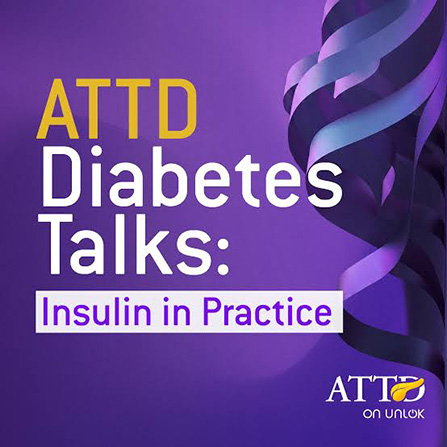
Nuria Fernandez, Senior Digital Education Specialist at ATTD, Advanced Technologies & Treatments for Diabetes (ATTD) told us the organisation partnered up with Cue Productions and launched their ATTD Podcasts for this very reason:
We noticed that healthcare professionals, researchers, and industry stakeholders increasingly consume content on the go, and podcasting is a great way to share expert insights beyond traditional conferences, publications, and webinars.
Episodes include Smart Tools & Technology for Better Insulin Outcomes. This details the latest technological innovations such as delivery innovations, connected devices, and titration support. Within a condensed 17 minute episode, the episode summarises the latest research developments and marries it up with practical insights. Listeners can get up to date quickly and use the episode’s reference points to dive into the latest research. For the clinicians and healthcare professionals in this group, they’re also left with practical advice for treating patients.
Nuria told us this is the general aim of the podcast:
“The podcast aims to facilitate meaningful conversations around diabetes research, prevention, treatment, and technology. By featuring leading experts, clinicians, researchers, and innovators, we strive to highlight emerging evidence, discuss real-world challenges, and share practical insights that can ultimately improve patient outcomes and advance the field.”
ATTD is a good example of how specialised podcasts can help ensure the latest scientific developments - once proven safe and effective - are adopted promptly in the real-world.
How Podcasts Help Nurture The Pipeline of Future Scientists and Researchers
For any field of science to grow, new discoveries need to be made. And that often equates to more data, more research and more researchers to do it. Therefore, a key effort of science communication is to encourage people into the sciences and to support their science-based careers.
First, let’s take a look at how science-comms podcasts can support people in related-careers, like healthcare, STEM jobs or academia. The ATTD Podcast is part of the learning resources ATTD offers on their educational portal, UNLOK. On this educational portal, healthcare professionals can listen to the podcast episodes as part of their education and earn CME/CPD credits upon completion. Nuria explained:
"This creates an additional layer of engagement by combining accessible, on-demand learning with accredited professional development, helping us reach listeners who are looking not only to stay informed but also to advance their clinical knowledge and education requirements."
For more pastoral and less-specific support, the University of London - Institute of Education's podcast, IOE Insights, offers advice and shared experiences for ‘everyone and anyone figuring out life in academia’.

Episodes include the likes of ‘When academia feels tough and uncertain” which discusses the difficulties academics face but reminds listeners these hardships don’t have to last forever. And that many academics have rich, varied and meaningful careers inside and outside of academia.
Through sharing academic struggles, the episode normalises researchers' experiences and reiterates challenging times may just be phases. This gives researchers the resolve to persevere with their careers in academia and not leave their fields prematurely. This level of informal support is one way to help researchers stay in their field, and ultimately contribute more.
Now, let’s take a look at how podcasts can encourage students to pursue scientific careers.
Podcasts Can Inspire the Next Generation of Scientists
Scientific fields rely on a steady pipeline of new talent, and it is vital to capture the interest of future scientists before they narrow their choices at university.
Science Podcasts for Sparking Interest at Primary and Secondary Education Level
A good science podcast sparks curiosity by explaining fascinating phenomena that are completely left off the school curriculum. For a student who thinks they hate science, an engaging episode can completely rewrite their perspective. For a student who already loves the subject, it deepens their passion.
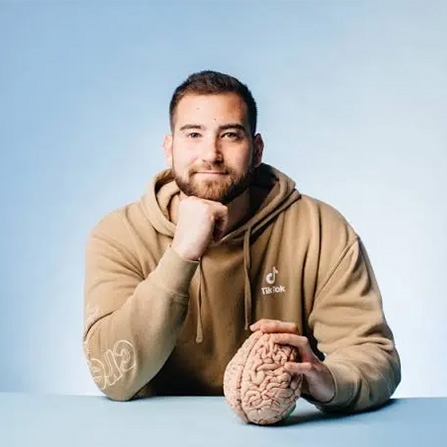
This drive for widespread impact is exactly what motivates Stanford neuroscientist Ben Rein. He began creating short, high-impact videos and audio content about the brain, noting:
"I’ve always been driven by impact. And what can I do to maximize my impact? Ultimately reaching people and getting people excited about science is my number one goal. I might sit in a classroom every year and teach students for 50 years, and still not touch as many lives as that one video that reached 2 million people."
Science Podcasts for Capturing Interest at Higher Education Level
Once students reach university, science communication shifts from sparking basic interest to recruiting future researchers. The reality of academic funding means fields like Clinical Medicine, Biology, and Engineering pull in the vast majority of researchers because they hold the largest pockets of funding.
If you are working in a highly specialized sub-field, finding fresh postgraduate talent can be incredibly difficult. A dedicated podcast allows existing scientists to expose undergraduate students to niche fields their standard degrees do not cover. An inspiring episode can be the exact catalyst that convinces an undergraduate to pursue a Master's or a Doctorate in your specific area of research.
Now we've looked at what science communication podcasts can achieve, let's look at what it takes to make an impactful science podcast.
The Best Podcast Practices For Science Communicators
If you’re interested in using podcasts for your science comms, then knowing the best practices will help deliver the impact you’re looking for.
With this in mind, here are the best podcast practices for science communicators.
Content Tips For Science Communication Podcasts
The content of your podcast really is the meat and bones of how you’re communicating your science.
Jo Filshie Browning is a specialist in verbal communication skills and the CEO-Founder of Filshie Browning Associates, a strategic healthcare and science communications consultancy. In her TED Talk, Science communications matters and how to do it better (of 60,000 views), Filshie Browning advises good science communication should follow 3 principles: People, Headline and Do.
In regards the first principle, Filshie Browning said:
“Talk about people not just statistics and numbers”
Honing in on people is a useful mechanism for framing your science in the real-world. It centres the real-life impact of the science at the core of your communication, making it instantaneously more interesting and relatable to your audience. Filshie Browning told her audience focusing on people has another benefit:
“Focusing on people builds connections and can help people really understand the science. And this principle works even when people aren’t the focus of the science. Because scientists are people. We can build connection through their stories, struggle and victories”
A people-first approach helps remind your peers of the relevance of their field. It can show budding scientists the real-world relevance of their field and give insight into possible impact they could have if they were to join it.
New Scientist’s podcast, The world, the universe and us uses this approach in their episode The Strange Case Of The Man Immune To Alzheimer’s.
The episode discusses the case of Doug Whitney, a 74-year old man who unlike the majority of his immediate family, has not contracted early-onset Alzheimer’s. This is despite Whitney inheriting the rare variant of a gene that should have caused early-onset Alzheimer’s in his mid-40s.
The podcast goes on to discuss how scientists believe this is due to heat-exposure through Whitney’s job. The episode flips around the approach of science first, real-life second. Instead, it focuses on one person - Whitney - and frames his experience within the scientific field. By doing so, it appeals to the audience’s curiosity around outliers, beating odds, and unusual phenomena, and makes the science instantly more interesting.
The second best practice Filshie Browning recommends is leading with the headline. In the attention economy, content needs to grab the attention of your audience immediately. Leading with your headline is the way to do this.
One The World, The Universe and Us episode covers the newest interstellar discoveries, including a new planet. When the general public are aware of the vastness of space, this level of information is not necessarily surprising. However, it’s the conditions of this planet, LHS 1140b, that make it interesting:
- It’s a rocky exoplanet in the ‘goldilocks zone’, that has the potential for water on its surface.
- It has an atmosphere, which could support life.
Using this information, the episode takes the most interesting-related idea and puts it into the headline: The Most Promising Alien Planet We've Ever Found?
The headline works on a simple understanding: the prospect of alien life is what the general public will find most captivating in space-research.
The episode also gives us a good example of Filshie Browning’s 3rd tip in action: Focus on what the science can do, rather than how the science was done. Notably, the episode doesn’t talk about how the planet was discovered. Rather it shifts the focus on to the planet’s characteristics and why this is important for sustaining life outside of earth.
General Podcast Best Practices
Outside of those science communication-related best practices, there are some general tips we can recommend for producing podcasts.
1. Plan your podcast
Don’t just hit record and start yapping. Plan your podcast in terms of its goals, format and length. Now’s a good time to lock in any compelling guests too.
When planning takes shape, each episode will get mapped out. Sticking to this plan will help you keep episodes concise and avoid overwhelming your audience with information.
2. Don’t overcommit
Too many podcasts start out with no end in sight. When the reality of producing a podcast sets in, especially alongside other work, burnout can happen and the podcast wanes. Set out one series and stick to a schedule that is achievable. Once you have a series under your belt, you can analyse its performance and make a call on doing a second series.
3. Acoustically treat your room
Good audio quality starts with the environment. With open spaces and hard surfaces, offices and labs are typically terrible for recording speech. The gold-standard is to use a podcast studio. If that’s not available to you - then try to acoustically treat your room, or throw a blanket over your head.
4. Use decent equipment
For your audience to understand your science, they need to be able to hear the message. Poor audio quality lets down quality content, so don’t let this happen to you by using decent equipment. A broadcast-quality microphone, pop-filter and mic stand will help ensure voices are clear without knocks, bumps or plosives.
5. Post-Produce
In podcasting, the edit is just as important as the recording. You’ll need a podcast-editing tool to improve audio quality, cut out the waffle and add the sonic details like your show’s intro and outro.
6. Distribute
Your podcast needs to be findable if you want listeners. Distributing to the major podcast platforms, like Spotify, Apple Podcasts, Acast etc is a must. Even if you already have contact with your target audience (like your undergraduate seminar students), providing listening options will improve uptake.
For a more in-depth look at what that entails, check out our complete podcast production guide.
How Cue Productions Can Help With Your Science Communications Podcast
Often the best people to talk about the latest scientific research are the researchers themselves. But science communication is a skill in itself, and being good at science doesn’t automatically qualify someone to be a good communicator.
This where partnering with Cue Productions can help. As your creative partner, we can help you refine your messages, ensuring maximum impact without losing the important details.
We offer a full-service solution that combines expertise, technical resources, and creative guidance to simplify the podcast process, leaving you to focus on the science. Our process covers:
- Strategy and Planning: We refine your concept, help select the best format, and define your target audience using data and research tools, ensuring your podcast aligns with your science communication goals.
- Recording: Access our studios in London, New York, Manchester, Dublin, or Lisbon, or record remotely with full technical support. Every session is optimised for broadcast-quality audio.
- Equipment and Setup: We manage microphones, headphones, DAWs, and all necessary accessories, so you don’t need to worry about technical details.
- Editing and Post-Production: Our team mixes, masters, and polishes every episode to ensure clarity, consistency, and a professional finish.
- Publishing and Distribution: We handle hosting, RSS feeds, scheduling, analytics, and promotional guidance, making sure your episodes reach the right listeners efficiently.
To discover more about our process and how we can help your science communications, get in touch using the form here.