The CEO’s LinkedIn Audio Strategy: Turning Long-Form Episodes into "Micro-Lessons"




If you’re an executive creating a podcast, it’s easy to assume the hard work ends once the episode goes live. In reality, producing your podcast is only the beginning.
One 45-minute conversation can generate enough content to keep you visible and engaged with your audience for weeks. The key is to stop treating each episode as a single piece of content and start treating it as a treasure trove of thought leadership.
LinkedIn’s 2026 algorithm increasingly rewards original commentary and expertise, alongside video. This makes it the perfect place to repurpose your podcast into a series of short, high-value “micro-lessons”. Shift your thinking from “how do I promote this episode?", to “how many valuable conversations can I create from it?”.
Why LinkedIn Audio Content Works Well
On LinkedIn, posting audio content can be the difference between a post that gets ignored and one that stops users mid-scroll.
Most users don’t want to read a screenful of text to reach one key takeaway, and as AI-generated text becomes more common, written text posts increasingly sound automated and generic. This is a problem your voice doesn’t have.
It humanises leadership: Voiceovers do what text can’t - they carry tone, personality, and authenticity. Hearing a real voice signals that there’s an actual person behind the brand, not just a content calendar.
It fits into busy schedules: A 30-60 second voiceover video can be consumed while multitasking, letting people absorb insights without having to stare at their screen. This is a key reason why short-form audio and video content performs so well.

Stop Thinking in Episodes & Start Thinking in Ideas
Most people look at a single podcast episode and see one piece of content. The necessary shift is realising that one conversation actually holds 15-20 different ideas.
Long-form content is engaging in the moment, but afterwards, most listeners retain only one core insight, framework, or piece of advice. This is what executives should be dissecting as regular LinkedIn content.
For example, a single 45-minute interview could touch on a controversial opinion, a memorable quote, a surprising statistic, a personal anecdote, a case study, a leadership lesson, a practical framework, or a mistake that shaped the guest. Every one of these moments can become its own post.
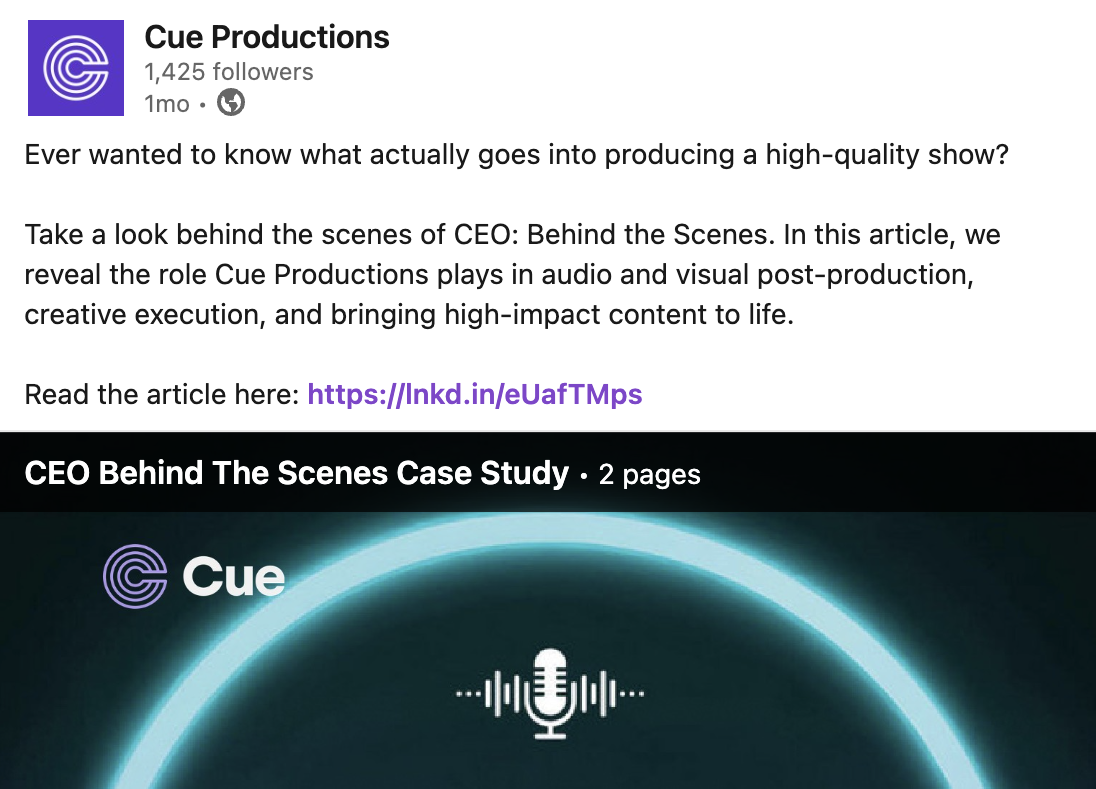
Take Cue Productions' work with Brook Street Recruitment's PeopleFirst podcast. A single conversation about about the challenges facing young people entering the workforce could generate posts on everything from changing recruitment expectations and navigating AI to modern workplace culture and advice for graduates and young people applying or interviewing for jobs. That single episode could fuel a consistent output of valuable content for weeks.
Prioritise ideas that solve a real problem or challenge conventional thinking over moments you think may go viral or are funny. Building a personal brand means becoming known for valuable insights, not viral clips.
Once you’ve identified an idea, add context: expand on why it mattered, and connect it to current events or your own experience. While reviewing the interview, note every insight worth pulling out, group similar themes together, and decide what format each suits best - video, carousel, text post, vertical voiceover. All of these formats trace back to the same source: your voice. Text posts and carousels repackage what you said in the episode - they’re not a separate content strategy.
.jpg)
How to Turn One 45-Minute Interview into 10 High-Impact LinkedIn Posts
1. The Insight
Identify one memorable takeaway from the conversation and expand on it.
2. The Story
A personal anecdote from the guest, expanded with written context in the caption.
3. The Controversial Take
Challenge a piece of conventional industry advice to spark audience discussion.
4. The Statistic or Quote
Pair a memorable quote or shocking statistic with branded graphics and a few lines of supporting context.
5. The Carousel
Turn a framework from the episode into a 5-8 slide breakdown.
6. The Behind-the-Scenes Lesson
Share a voiceover or video of something you learned while recording, to humanise your leadership.
7. The Industry Prediction
Use discussion as a platform to suggest future industry trends and invite opinions.
8. The Leadership Lesson
Pick out insights on leadership related topics - decision-making, resilience, communication, team management - and explain why it resonated. Frame it as an actionable takeaway.
9. The Quick Tip
Find one clear, actionable takeaway that’s easy for users to save and share.
10. The Follow-Up Conversation
Respond to comments on earlier posts and keep discussions going instead of starting from scratch.
The Rise of Vertical Voiceovers on LinkedIn
What are Vertical Voiceovers?
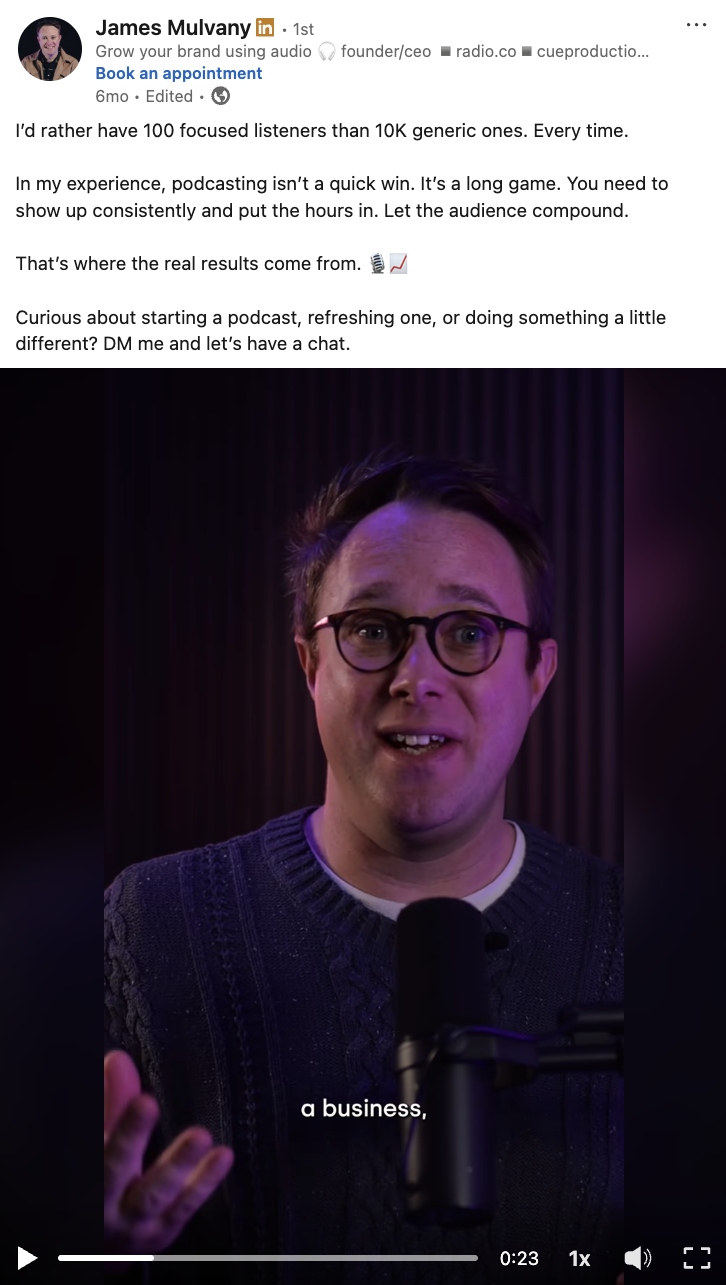
Vertical voiceovers are 9:16, mobile-first videos in which a narrator talks over graphics or visual assets. They fill most of an average phone screen and are built to catch attention as people scroll - the same format that TikTok, YouTube Shorts, Instagram Reels have made the default for short-form video content.
Why They’re Performing in the 2026 LinkedIn Algorithm
On a primarily business-focused platform like LinkedIn, vertical video works especially well for quick insights, opinions, and hot takes. Horizontal content still has the edge for education or product demonstrations.
- Face or Voice to Expertise: Unlike static text or link posts, vertical voiceovers let audiences hear your tone and confidence, underpinned by real authenticity. For executives, this builds trust with listeners and humanises the brand.
- Increase Watch Time: Short-form content tends to have higher completion rates. A 30-60 second voiceover with dynamic visuals and captions keeps viewers watching until the end. Higher retention signals to LinkedIn that your content is valuable and worth showing to more people.
- Native to the Feed: Like most social media platforms, LinkedIn has gone mobile-first. Vertical video takes up more screen real estate and feels like an authentic insight from someone in your network, rather than an ad.
- Original Commentary: LinkedIn favours original expertise over recycled content. A voiceover lets you repurpose material with fresh context - explaining why a point matters and expanding on it - rather than just reposting a clip with a caption.
- Encourage Conversations: Strong executive content invites discussion. Ending a voiceover with a question or challenge encourages comments and signals to LinkedIn that the content is resonating.
How to Create Them Quickly
Producing a vertical voiceover for LinkedIn doesn’t need to take up your whole day. Here’s a four-step process to follow below:
Step 1: Draft a Short Script
Keep it tight - under 60 seconds - to avoid sounding robotic. Open with a hook in the first three seconds: a common problem, question, or bold statement. Focus on one key point and end with a call to action.
Step 2: Record Audio
Record in a small room with soft furnishings to cut down on echo and background noise. Invest in a good-quality microphone and use headphones to monitor audio as you go. Alternatively, simply use the free Voice Memos mobile app. Speak slowly and deliberately, and lower your pitch for authority.
Step 3: Gather High-Quality Visuals
Choose assets and ensure cropped to vertical format - a screen recording or high-quality, professional B-Roll or stock footage.
Step 4: Add Polish
Trim long pauses and filler words. Add auto-captions. Use clean, executive-appropriate fonts and colours, and keep text in the upper or middle third of the frame so it doesn’t get cropped.
Build a Weekly Publishing Schedule Instead of Posting Randomly
Consistency is one of the biggest challenges in executive thought leadership, and an inconsistent posting schedule does little to grow an audience or a reputation. Most executives post a flurry of content right after an episode is released, then go quiet until the next one. A continuous content cycle will always beat short bursts of activity.
Why this matters:
- It keeps your expertise visible between episode releases.
- It gives your audience more chances to discover and engage with your content.
- It builds authority by revisiting ideas over time, rather than saying everything at once.
- It makes content creation more manageable, since you’re always working from existing material.
How to Spread One Episode Across a Week
Instead of releasing five clips in two days, stagger the content releases. Voice should lead the week as it is still your most distinctive format. Text and visual posts spread around it will extend reach and keep the feed active on days in between.
- Monday: Introduce a key insight with a vertical voiceover.
- Tuesday: Expand on the same idea with a text post or essay.
- Wednesday: Break down a framework or thought process in a carousel.
- Thursday: Publish a short podcast snippet highlighting a memorable moment.
- Friday: Close the week with a question that invites discussion.
Common Repurposing Mistakes Executives
Posting Clips Without Context
Don’t alienate your audience by assuming everyone has seen the full episode. Introduce each clip with a line explaining what it’s about and why it matters, then add your own perspective so it feels like a fresh piece of content rather than a highlight reel.
Sharing Content That’s Too Promotional
It’s natural to want your social media posts to drive traffic to the full episode, but ending every post with the same “watch the full episode here” often feels too promotional and inauthentic. Focus on providing value first - then promote the episode after.
Using Clips That are Too Long
Most users are scrolling through feeds quickly, waiting for something to catch their eye. A short clip built around one idea will outperform a long summary anytime. Multiple points in one conversation is a good thing - it means more material to spread across days or weeks, rather than one long video.
Forgetting to Optimise Captions and Hooks
Attention spans are short and feeds are cluttered. The first few seconds of a video determine whether someone stops or keeps scrolling. Open with a thought-provoking statement, challenge, or question, and use captions to reinforce the takeaway for anyone watching without sound - which is more common than you think!
Publishing Inconsistently
Mass-posting after a podcast episode launch and then disappearing from feeds until the next episode wastes valuable content and momentum. A realistic publishing schedule that spreads insights across days and weeks keeps you visible and conversations active. Consistency builds trust and authority far more effectively than random bursts of activity.
Conclusion
The key takeaway? Executive podcasts don’t need to end when the recording stops. This is actually when they can come alive and deliver value far into the future/long after the 45-minute episode is over.
As an executive or thought leader, you should treat every podcast interview or conversation as a library of reusable, repurposable expertise. Combine micro-lessons, written commentary, and vertical voiceovers to stay visible on LinkedIn between episodes - without needing to create anything from scratch.
The most effective approach to LinkedIn audio content for executives is to focus on extracting more value from the conversations and discussions you’ve already had. Think of it as sustainable content creation. No new content is needed, simply repurpose what you’ve already made.
If you’re reading this, you may have a goldmine of content right under your nose.
If you want to turn your next podcast episode into a week’s worth of LinkedIn content, see how our team at Cue Productions can help you. Get in contact today.