What We Learned Producing 500+ Episodes for B2B Brands: Data, Insights & Patterns





At Cue, we recently hit a milestone that few in the production industry can claim: over 500 episodes produced specifically for B2B brands. From the highly technical medical community of WSPID to the organizational intelligence of the Work Intelligence Lab, we’ve spent thousands of hours analysing what makes a business podcast move from a nice-to-have marketing experiment to a high-performance growth strategy.
We’ve watched shows climb to the top of the Apple Business charts, win Quill Awards for Best New Podcast Company, and most importantly, build the kind of Trust Equity that short-form ads simply can’t buy. But 500 episodes isn't just a number; it’s a dataset. It’s a map of the quiet patterns that separate a high-ROI B2B show from a creative hobby. If you’re a CMO or a Head of Content looking to justify a podcast budget in 2026, these are the truths we’ve learned along the way.
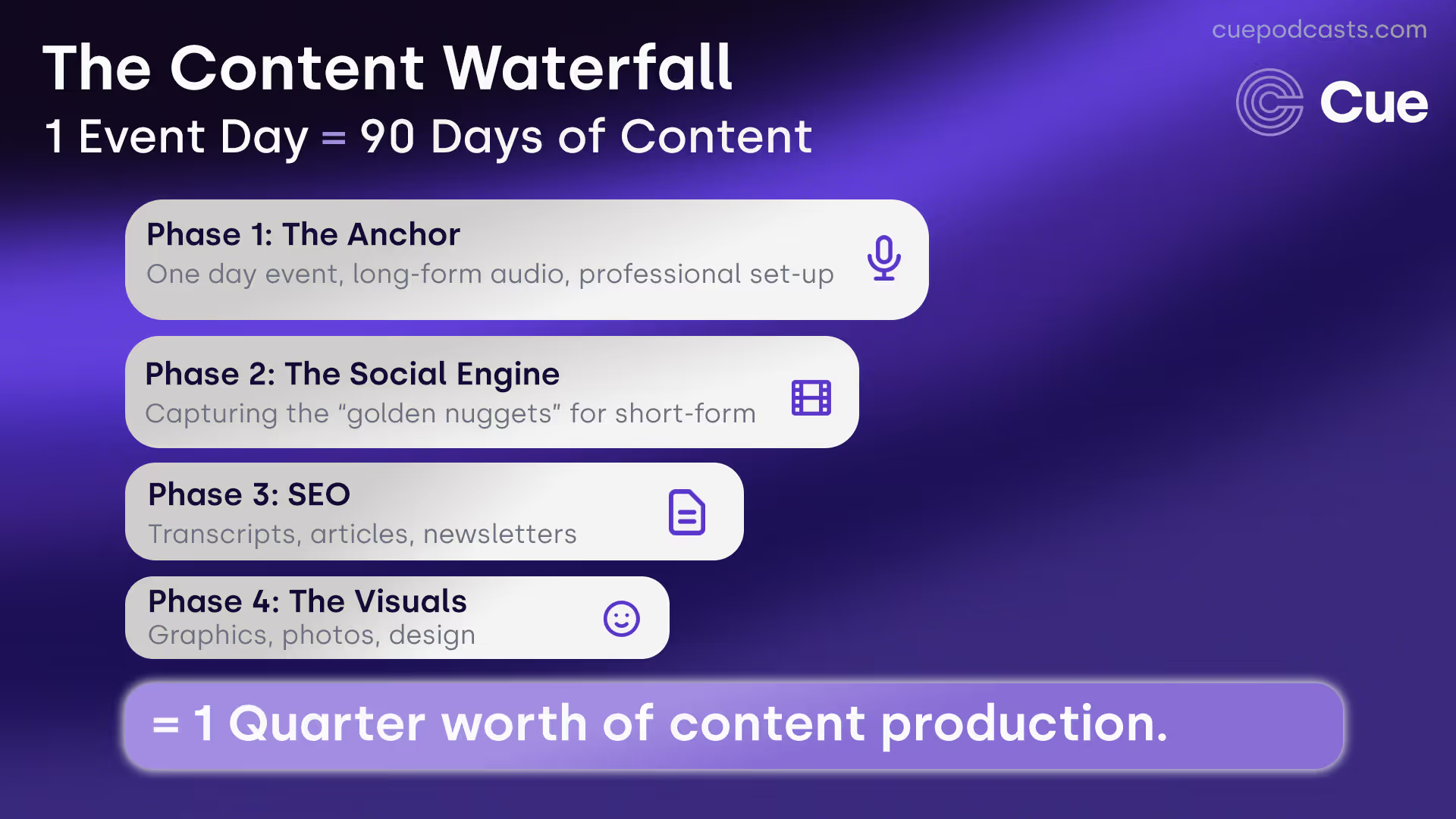
1. The Waterfall Strategy: Your Podcast is Your Content Engine
The biggest mistake B2B brands make is viewing a podcast as a standalone project. Our data shows that the most successful shows treat the recording session as the Source Code for their entire marketing department.
A 45-minute conversation between two experts contains more raw intellectual property than ten brainstorming sessions. When we produce a show, the audio is the starting point, but not the finish line. We help brands extract what we call the Content Waterfall:
- Video First: According to LinkedIn’s own data, video generates 5x more engagement than static content. We extract 4–6 high-impact clips from every episode. A talking head clip with captions is the most effective way to drive passive listeners to your full episode.
- The SEO Magic: We’ve found that transcripts are great for helping with SEO, organic search and accessibility. However, articles are what give that extra human-level flair. By rewriting the interview into a 1,200-word SEO-optimised blog post, brands can rank for technical keywords without starting from a blank page.
- The "Rule of 7": This classic marketing principle suggests a prospect needs to see your brand seven times before they buy. A podcast allows you to show up in their ears, their LinkedIn feed, their email inbox, and their Google search results—all coming from just one recorded conversation.
2. The Silent KPI: Relationship-Based ROI
In the B2C world, success is measured in millions of downloads. In B2B, that’s a vanity metric. If you are selling a £100,000 SaaS solution, you don't need 10,000 listeners; you need the right 10 listeners. After 500 episodes, we’ve identified a Silent KPI that our most successful clients value most: Strategic Business Development.
By inviting a Dream 100 prospect or a major industry leader to be a guest, a brand builds a 60-minute, high-trust relationship that could take six months of cold-calling to achieve. You aren't pitching them; you're platforming them. We’ve seen single guest appearances result in six-figure partnerships because the podcast acted as the ultimate warm introduction. In this context, the podcast is more than a media play, it's a sales enablement tool.
3. Case Studies: The Data in Action
Case Study A: WSPID (World Society for Paediatric Infectious Diseases)
The Objective: To connect a global network of medical professionals and share life-saving clinical insights across borders.
- The Strategy: WSPID targets an incredibly specific, high-stakes niche. The show focuses on "expert-to-expert" content—discussing things like antimicrobial resistance and syndromic testing.
- The Innovation: To truly Go Global, we worked with WSPID to implement a localization strategy. We produced episodes with Spanish audio and English subtitles to ensure the content reached their significant member base in Central and South America.
- The Result: A definitive global resource that establishes WSPID as the home for pediatric infectious disease expertise. It proves that the narrower the niche, the higher the conversion of listener to community member.
Case Study B: Work Intelligence Lab (by ManpowerGroup)
The Objective: To position ManpowerGroup at the center of the "Future of Work" conversation using unscripted, data-backed dialogue.
- The Strategy: Each episode of the Work Intelligence Lab begins with a single, provocative data point. From there, industry leaders (from companies like Cloudflare and Babcock International) debate how that data is playing out in the real world.
- The Pattern: This show succeeds because it acts as a "White Paper You Can Listen To." It skips surface-level fluff and dives into the "Hard Part of AI" or the "Skills Crisis" in aerospace.
- The Result: High completion rates among HR directors and C-suite executives who value data over generalities.
Case Study C: CEO: Behind the Scenes (The CEO Magazine)
The Objective: To humanize the world’s most powerful leaders and build a high-level networking platform.
- The Strategy: This show strips away the corporate gloss. By interviewing global CEOs about their failures and pivotal moments, it creates authority bias.
- The Power of Association: Every time a high-profile guest shares their episode on LinkedIn, they are essentially endorsing The CEO Magazine to their own high-net-worth network.
- The Result: Over 40,000 global listeners and a consistent spot on the international business charts.

Case Study D: Reimagining Government (Centre for Public Impact)
The Objective: To challenge outdated government systems and spotlight people-centered public service.
- The Strategy: We moved away from the two people talking format and built a Narrative-Driven show for the Centre for Public Impact. We used sound design and field recordings to make complex policy issues feel like a compelling story.
- The Result: Winning The Circle Awards for Best Podcast for Social Good, this show proved that B2B and public sector content doesn't have to be dry to be impactful.
4. Technical Depth vs. Broad Appeal
Our data shows a clear pattern: B2B listeners don't want bite-sized. While TikTok thrives on 15 seconds, research from Edison Research consistently shows that podcast listeners are among the most educated and dedicated content consumers.
In B2B, being too technical is rarely the problem. In fact, "dumbing down" your content can actually hurt your brand's authority. If your target audience consists of CEOs, engineers, or surgeons, give them content that respects their intelligence. Our analytics show that high-level professionals have higher-than-average completion rates for shows that exceed 30 minutes, provided the value density remains high.
5. Audio Quality as a Trust Signal
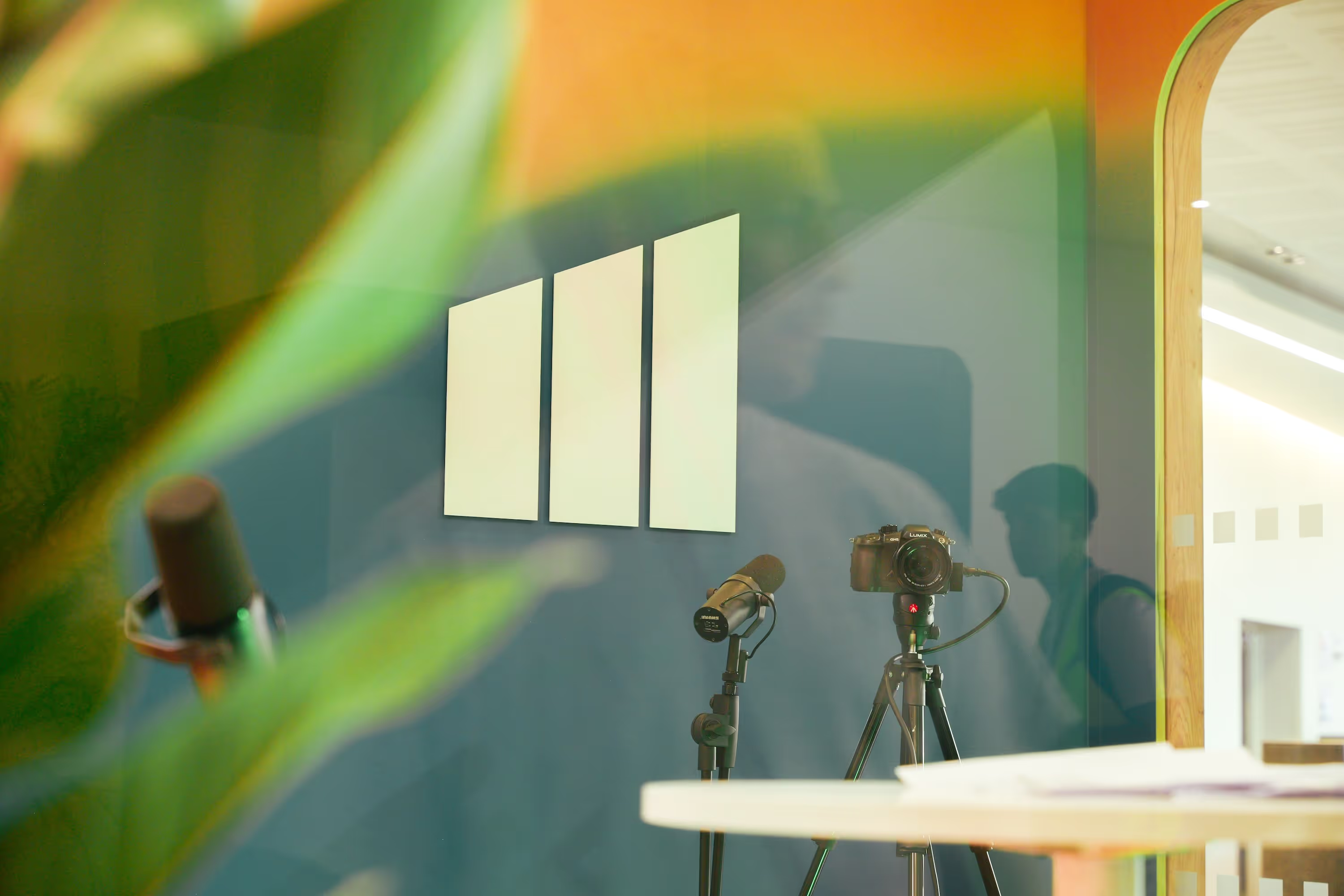
In B2B, your voice is literally your brand. If your podcast sounds like it was recorded in a bathroom, your audience subconsciously associates that lack of polish with your professional services.
After 500 episodes, we’ve seen that Sonic Branding (custom music, professional mastering, and high-end remote recording) acts as a trust signal. When we produce shows like Bang the Drum for Azets, the broadcast-quality audio tells the listener: This brand is a market leader. Professional editing is more than just about removing "ums" and "ahs", it’s about creating a frictionless experience that respects the listener’s time.
6. Solving the "Global Logistics" Puzzle
When producing for a global organisation like WSPID or ManpowerGroup, logistics can feel like a barrier. How do you maintain broadcast quality when your host is in London, your guest is in Geneva, and your producer is in Manchester?
After 500 episodes, we’ve perfected the Cue Remote-First Standard. We’ve learned that relying on standard video conferencing tools is a recipe for a low-quality brand image. Instead, we implement:
- Local High-Fidelity Recording: We use specialized platforms like Zencastr or Riverside.fm that record audio and video locally on the guest’s computer. This bypasses "internet glitches" and ensures the final result sounds like everyone was in the same studio.
- The "Concierge" Technical Check: For high-level guests, we provide a 10-minute technical onboarding to ensure lighting, framing, and acoustics are perfect. We handle the technology so the guest can focus on the expertise.
- Time-Zone Agility: Our production workflows are designed to handle guests from Singapore to San Francisco, ensuring that the experience is seamless regardless of location.
7. The 2026 Shift: Video is No Longer Optional
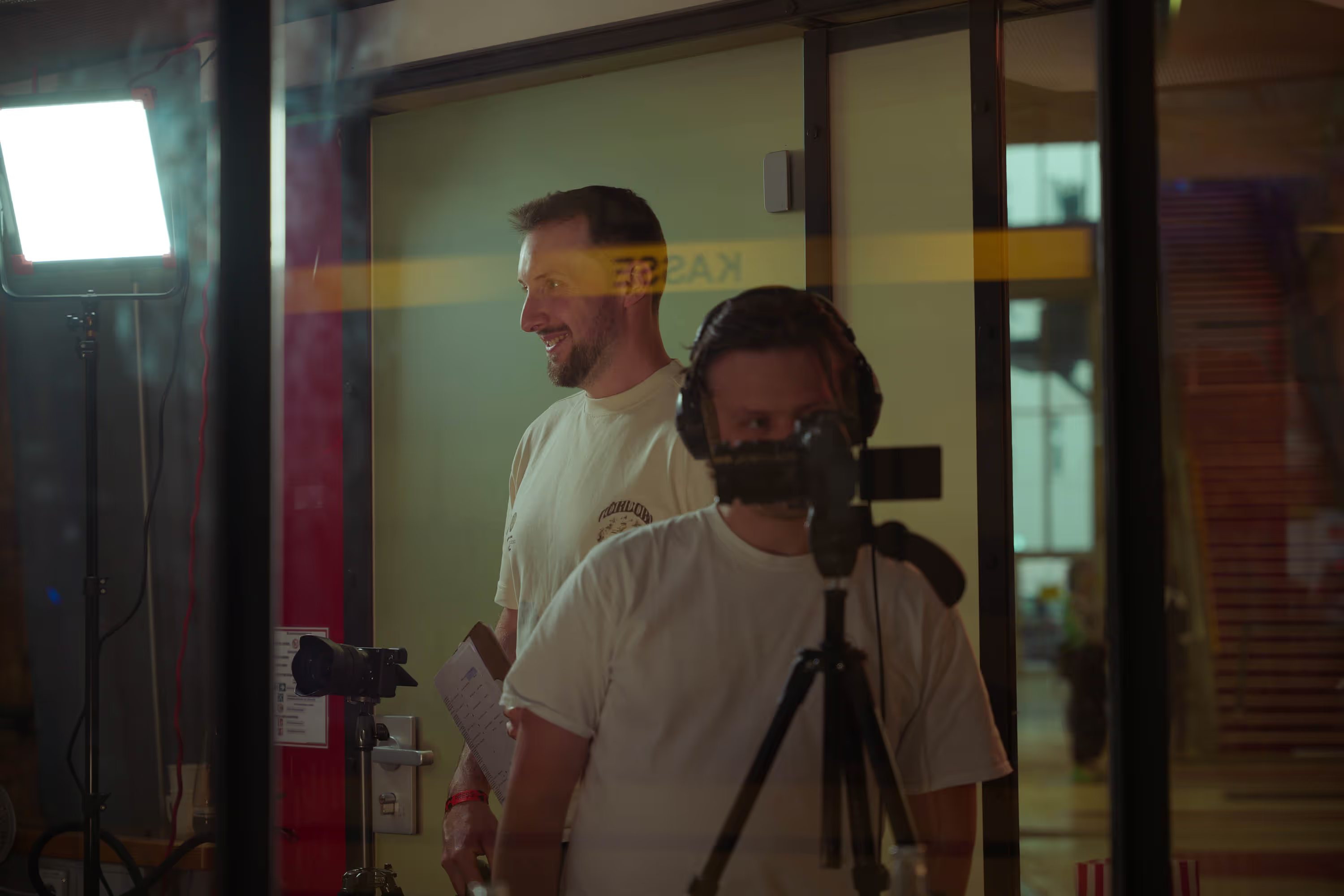
As we move through 2026, the data is undeniable: Video is the primary discovery engine for audio. Our internal analytics show that B2B podcasts with a video component see 250% more engagement on LinkedIn than audio-only shows.
Whether it’s a high-end on-location shoot or a professional remote video setup, seeing the guest’s face builds a level of transparency and connection that audio alone cannot match. It also allows for the creation of video shorts, which are currently the most effective way to beat the LinkedIn algorithm and reach prospects who haven't yet discovered your brand.
8. Strategy Over Consistency: The Season Approach
The old advice was publish something every week or die. After 500 episodes, we disagree. For B2B, Seasonality is the Secret Weapon.
Launching an 8-to-10 episode season around a specific theme (e.g., "The Future of AI in Manufacturing") allows for:
- A Marketing Burst: You can focus your social budget on a concentrated 2-month window.
- Higher Guest Quality: It is easier to secure a busy CEO for a "Special 8-part Series" than for an indefinite weekly commitment.
- Prevention of "Podfade": B2B marketing teams are busy. Seasons provide a natural "start and stop" that prevents team burnout and allows for strategic pivots between seasons.

The Verdict: 500 Episodes Later
The B2B podcasting landscape is a mature, data-driven pillar of a modern marketing mix, and no longer an experimental channel. The brands that win are those that stop trying to "make a radio show" and start trying to build a content ecosystem.
Whether it’s the clinical authority of WSPID, the data-depth of the Work Intelligence Lab, or the narrative excellence of Reimagining Government, the pattern is clear: Quality + Strategy + Repurposing = ROI.
At Cue, we’ve spent the last 500 episodes perfecting this formula. We don't just hit record; we build the workflow that carries your brand's voice to the people who matter most.
Ready to Launch the Next 500?
Building a B2B podcast that actually drives revenue requires more than just a microphone, it requires a partner who understands your industry’s unique patterns.
At Cue, we specialise in helping global brands turn complex ideas into high-impact audio and video. From initial strategy and guest sourcing to world-class editing and LinkedIn-first distribution, we handle the heavy lifting so you can focus on the conversation.
Let’s define your brand’s voice. Book a Strategy Call with the Cue Team or Explore Our Full Portfolio of B2B Shows.